
Case Study Two: Building Search Visibility for a New Primary Care Brand and Website Without Increasing Ad Budget
Focus Area
Website Revamp, SEO Structure, Organic Visibility, User Acquisition, Healthcare Marketing, Local SEO, Website Crawling Signals
Timeline
Website launched in October
Ad Budget $90 a day
Paid ads began in December
SEO and website structure improvements were refined in May
Executive Summary
Launching a new healthcare website is not just about creating a place for people to visit. It is about building trust, creating clarity, and helping both users and search systems understand what the brand offers.
That was the challenge for the new Primary Care brand and website. Although the service line was connected to an existing healthcare ecosystem, the Primary Care brand still had to build its own digital identity from the ground up. It needed to earn visibility, create patient confidence, and send stronger signals to search engines about its services, locations, providers, and purpose.
The website launched in October. However, paid ads were not introduced until December. Early visibility relied more heavily on organic social media, word of mouth, internal referrals, and existing brand familiarity from the larger healthcare organization. In addition, the original paid ad setup was not built with a mature healthcare marketing strategy, which made it even more important for the website itself to become stronger, clearer, and more measurable.
In May, the website was refined through a focused SEO and user experience revamp. The work was not limited to design updates or stronger calls-to-action. It was built around a deeper goal: making the website easier to understand from every angle.
For patients, that meant clearer next steps. The site needed to help someone find a location, review services, learn about providers, and move toward scheduling without confusion.
However, the work also had to support the systems behind search. Because this was a new Primary Care brand and a new website, there was not a long history of organic authority for Google to rely on. The website needed stronger structural signals. It needed cleaner internal links, clearer button identifiers, more intentional service language, and location pathways that made sense to both users and crawlers.
That is why the May work mattered. The updates were not random website edits. They helped shape how the site could be read, crawled, indexed, measured, and understood. At the same time, they made the patient journey feel more direct and trustworthy.
The paid ad budget stayed consistent from April 1–28, 2026 to May 1–28, 2026. So the May lift should not be explained as a result of increased spend. Instead, the performance shows that the new Primary Care brand and website became more discoverable, structured, and effective after the SEO and website pathway improvements were made.
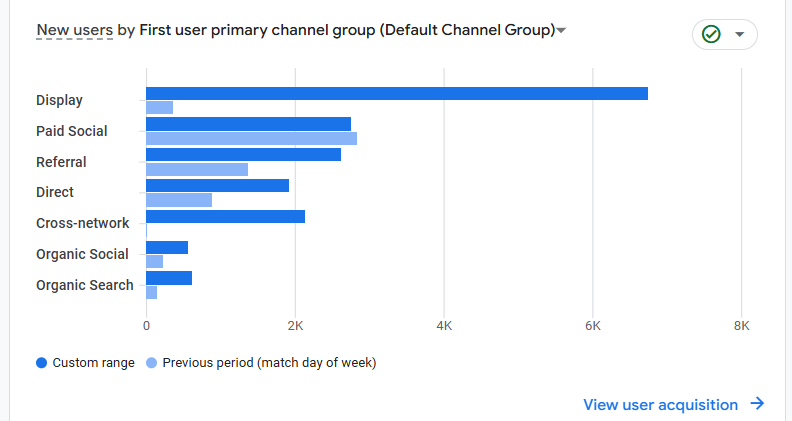
From May 1–28, 2026, the website generated 3,539 new users, compared to 2,126 new users from April 1–28, 2026. That represents a 66.46% increase in new users. Organic Search increased from 115 to 169 new users, Organic Social increased from 105 to 216 new users, Direct increased from 257 to 633 new users, and Referral increased from 393 to 448 new users.
The strongest takeaway is not only that traffic increased. The website began showing stronger discovery signals across search, social, referral, and direct channels. In other words, more people were finding, recognizing, and entering the Primary Care website through multiple pathways, not just through paid media.
The Starting Point
The Primary Care website launched in October as a brand-new digital presence for a brand-new service line. Although the larger healthcare organization already had existing awareness, the Primary Care brand had to establish its own position.
A new website does not automatically inherit full organic visibility. Search engines need time, structure, and repeated signals to understand what a website is about. Users also need repeated exposure before they recognize a brand, trust it, and take action.
At the same time, primary care is different from urgent care in the way patients search and decide.
Urgent care is often immediate. A patient may search quickly, choose a nearby clinic, and visit the same day.
Primary care is more relationship-based. Patients may compare providers, review services, check locations, look for insurance information, revisit the website, and take more time before scheduling.
Because of that, the website needed more than traffic. It needed clarity.
The site had to answer practical patient questions:
- Where can I go?
- Who can I see?
- What services are available?
- Is this primary care or urgent care?
- How do I schedule?
- Can I trust this provider for ongoing care?
Those questions shaped the May website and SEO strategy.
The Challenge
Before the May improvements, the website had visibility, but the structure needed to be stronger.
The issue was not that the website lacked value. The issue was that the website needed clearer signals. For a new brand and new website, small structural details can make a major difference. Buttons, links, navigation pathways, page relationships, metadata, accessibility labels, and service language all help define how a site is understood.
That understanding happens on two levels.
First, the website has to make sense to people.
Second, the website has to make sense to search systems. Crawlers need clean pathways. Indexing systems need enough structure to understand which pages matter and how they connect to the broader website.
Before the May revamp, the site needed stronger alignment between those two needs. The patient journey and the crawler journey had to support each other.
The website also needed to separate its own growth story from paid media noise. Since paid ads were added later and were not originally built with an experienced healthcare strategy, it was important to evaluate whether the website itself was becoming more effective.
That created the central question:
Could a new Primary Care brand and website gain stronger visibility by improving structure, SEO identifiers, internal pathways, and crawlable signals without increasing ad budget?
The May results showed that it could.
Why the Revamp Was Important
Patients are not just clicking through a website. They are deciding whether a provider, location, and brand feel credible enough for their care. If the website feels unclear, users may hesitate. If location information is hard to find, they may leave. If the calls-to-action are vague, they may not know what to do next. If internal links do not explain where they lead, both users and search engines receive weaker context.
For a new Primary Care brand, clarity was not optional. It is the foundation of growth.
The May revamp helped move the website from a basic online presence to a more structured patient acquisition asset.
A button label, internal link, page path, service section, provider connection, or accessibility label may seem small on its own. However, together, those details create the structure that helps people and search systems understand the website.
In healthcare marketing, is trust being built through clarity. The easier it is for a patient to find the right information, the easier it is for them to take the next step. At the same time, the easier it is for crawlers to understand the site, the stronger the foundation becomes for long-term search visibility.
The Strategy
The strategy focused on shaping the website so that the patient experience and the search system experience worked together.
That meant refining how important actions were labeled.
It meant improving the language used across internal links.
It meant making service and location pathways easier to follow.
It meant using clearer identifiers so analytics systems could better measure meaningful actions later.
It also meant giving crawlers a cleaner structure to move through, interpret, and index.
Website identifiers are the small but meaningful signals that help define what an element means, where it leads, and why it matters. They support user experience, accessibility, SEO, event tracking, crawler interpretation, and future reporting.
For the Primary Care website, this included refining button labels, button IDs, ARIA labels, internal link text, service page language, location pathways, appointment pathways, and navigation clarity.
For example, a basic location button became more intentional when structured like this:
Button text: Find A Location
Destination: /locations/
Button ID: find-location-btn
ARIA label: Find a primary care location
This type of improvement may seem small, but it creates a stronger foundation.
For the patient, it makes the action clear.
For accessibility, it gives assistive technology better context.
For tracking, it gives future analytics a cleaner structure.
For crawlers and search engines, it contributes to a more understandable website environment where actions, destinations, and page relationships are more clearly defined.
The why is simple: a new website has to work harder to be understood.
Internal Linking and Anchor Text Strategy
The website’s linking language was another important opportunity.
Search Console screenshots showed that the website was being associated with terms such as primary care, book an appointment, services, and visit website. These signals were useful because they showed that the website was beginning to develop both service-based and action-based recognition.
However, the data showed room for improvement. Some linking text was still too generic, including terms like website, web, and visit website.
Those links may still send visitors to the website, but they do not create as much meaning as more descriptive anchor text.
A stronger SEO direction uses link language such as:
- Find a primary care location
- Schedule a primary care appointment
- Meet our primary care providers
- View primary care services
- Book a new patient visit
The anchor text helps define the relationship between pages. It gives search engines more context, but it also helps real people understand what they are clicking.
For crawlers, internal links are pathways. When those pathways use clear, descriptive language, they help search systems understand how pages connect.
The goal was not to over-optimize the website. The goal was to make the site more natural, more helpful, and more specific.
Location and Service Pathway Improvements
Primary care is local by nature.
Patients need to know where they can go, who they can see, and how to schedule. Because of that, the website needed to connect the most important decision points: locations, providers, services, new patient information, scheduling, and brand trust.
Instead of leaving users to figure out where to go next, the website needed to guide them to the next steps. Someone reading about services should be able to find a location. Someone viewing a location should be able to schedule. Someone reviewing providers should understand whether that provider connects to the care they need.
This is where the website becomes more than a digital brochure. It becomes part of the patient acquisition system.
A patient may enter through a service page, move to a location page, review a provider, leave the site, return later, and then schedule. Stronger pathways will help support that behavior instead of forcing every visitor into one narrow funnel.
Those same pathways also matter for crawlers. Clear service and location relationships help search engines interpret the site as a connected healthcare resource rather than a collection of disconnected pages.
Paid Media Context
Paid ads were part of the environment, but they were not the full story.
The Primary Care website launched in October. Paid ads did not begin until December. In the early months, the website relied on organic social media, word of mouth, internal referrals, and existing brand awareness.
By May, paid ads were active, but the budget remained consistent between April 1–28 and May 1–28. That detail is important because it prevents the performance story from being reduced to “more spend created more traffic.”
With paid media spend held steady, the website produced stronger acquisition signals after the SEO, structure, and website pathway improvements were made.
It shows that the website itself became more effective. It also shows why SEO structure, user experience, crawler clarity, and measurement readiness should not be treated as secondary work. They directly affect how well every channel can perform.
Paid media can bring people to the site. However, the website determines whether people understand what they find when they get there. It determines whether search systems can correctly interpret the value and structure of the site over time.
Performance Results
The clearest May improvement came through GA4 user acquisition data.
From April 1–28, 2026 to May 1–28, 2026, the Primary Care website increased total new users from 2,126 to 3,539. That is a 66.46% increase.
| Channel | April 1–28, 2026 | May 1–28, 2026 | Change |
|---|---|---|---|
| Total New Users | 2,126 | 3,539 | +66.46% |
| Cross-network | 447 | 1,199 | +168.23% |
| Display | 589 | 781 | +32.6% |
| Direct | 257 | 633 | +146.3% |
| Referral | 393 | 448 | +13.99% |
| Organic Social | 105 | 216 | +105.71% |
| Organic Search | 115 | 169 | +46.96% |
| Paid Social | 207 | 59 | -71.5% |
| Unassigned | 12 | 29 | +141.67% |
| Paid Search | 1 | 5 | +400% |
The most important story is not just that traffic increased. The stronger story is where the increase came from.
- Organic Search grew.
- Organic Social grew.
- Direct traffic grew.
- Referral traffic grew.
That combination suggests the website was gaining momentum through stronger visibility, better brand recall, improved referral behavior, and clearer user pathways.
Because the paid budget stayed consistent, the May growth becomes more meaningful. It shows that the website foundation had improved. More people were discovering the site, remembering it, returning to it, and entering through non-paid or less directly paid pathways.
Organic Search Growth
Organic Search increased from 115 new users in April to 169 new users in May, a 46.96% increase.
Organic Search does not usually grow because of one button or one isolated page edit. It grows when the website begins sending stronger signals across multiple areas.
Those signals can include clearer page structure, stronger internal linking, better service language, improved location pathways, and more relevant website content.
Organic search is one of the strongest signs that a website is becoming easier to discover without relying only on paid traffic. For the Primary Care website, this growth supported the idea that the May revamp helped the site become more visible in the moments when people were actively looking for care.
It also supports the crawler side of the story. When a site becomes easier to crawl and interpret, it has a stronger foundation for organic discovery. That does not mean every search result changes overnight, but it does mean the site is better prepared for long-term search visibility.
Organic Social Growth
Organic Social increased from 105 new users to 216 new users, a 105.71% increase.
With the Primary Care brand being supported by organic social activity rather than a full paid launch. Social media helped create awareness, but the website still had to convert that awareness into meaningful visits.
The increase suggests that the social audience had a clearer path back to the website in May. It also supports the idea that people were becoming more familiar with the Primary Care brand and engaging with it outside of paid search.
For a newer service line social awareness can help build trust before a patient is ready to schedule.
Direct Traffic Growth
Direct traffic increased from 257 new users to 633 new users, a 146.3% increase.
Direct traffic can indicate that people are remembering the website, typing it directly, returning later, or arriving from sources that GA4 classifies as direct.
For a new Primary Care brand, this supports the role of brand awareness, word of mouth, internal referral behavior, and offline discovery.
In plain terms, more people appeared to know where to go.
With brand recall being difficult to build for a new healthcare service line. But when direct traffic increases alongside organic and referral traffic, it suggests that the website is becoming part of the audience’s decision journey.
Referral Traffic Growth
Referral traffic increased from 393 new users to 448 new users, a 13.99% increase.
This supports the larger healthcare ecosystem story. The Primary Care website was not operating in isolation. It benefited from connected pathways, and the existing brand trust.
Referral growth was not the largest increase, but it is important because it showed that the website was gaining support from sources beyond search and paid media.
Referral traffic can represent trust transfer. If someone finds the Primary Care website through another trusted source, they may enter with more confidence than a cold visitor.
Search Console Visibility Signals
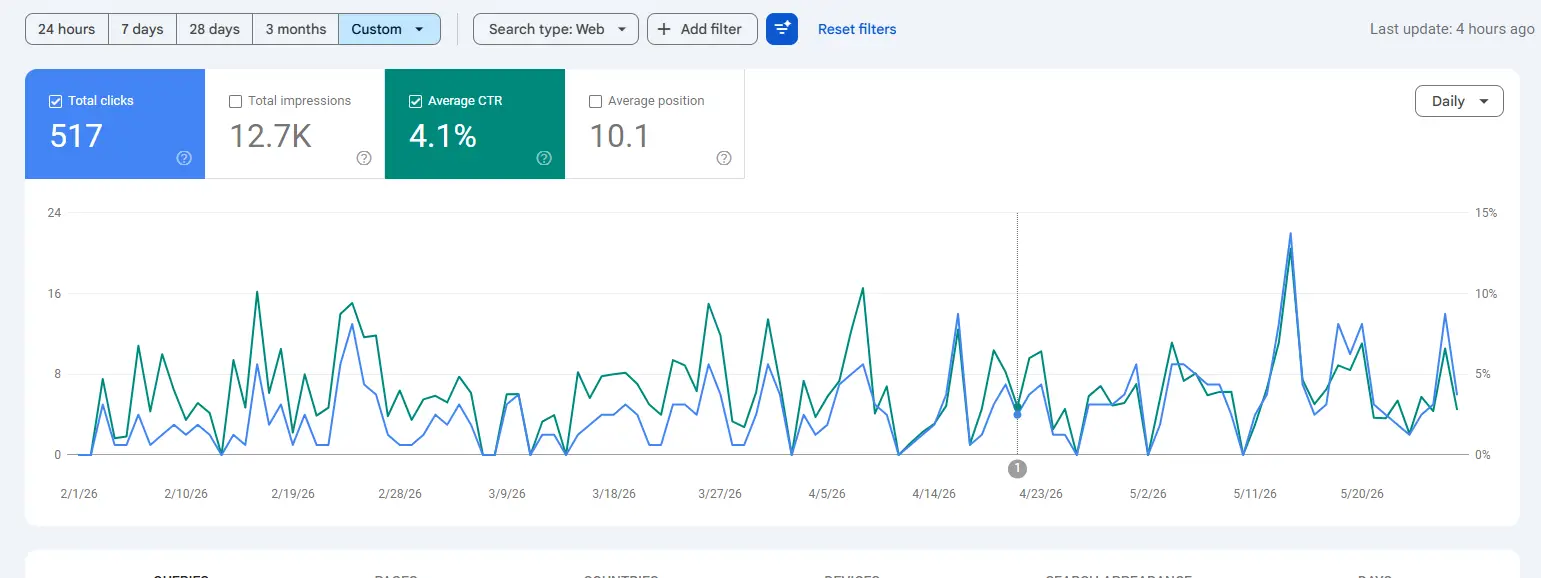
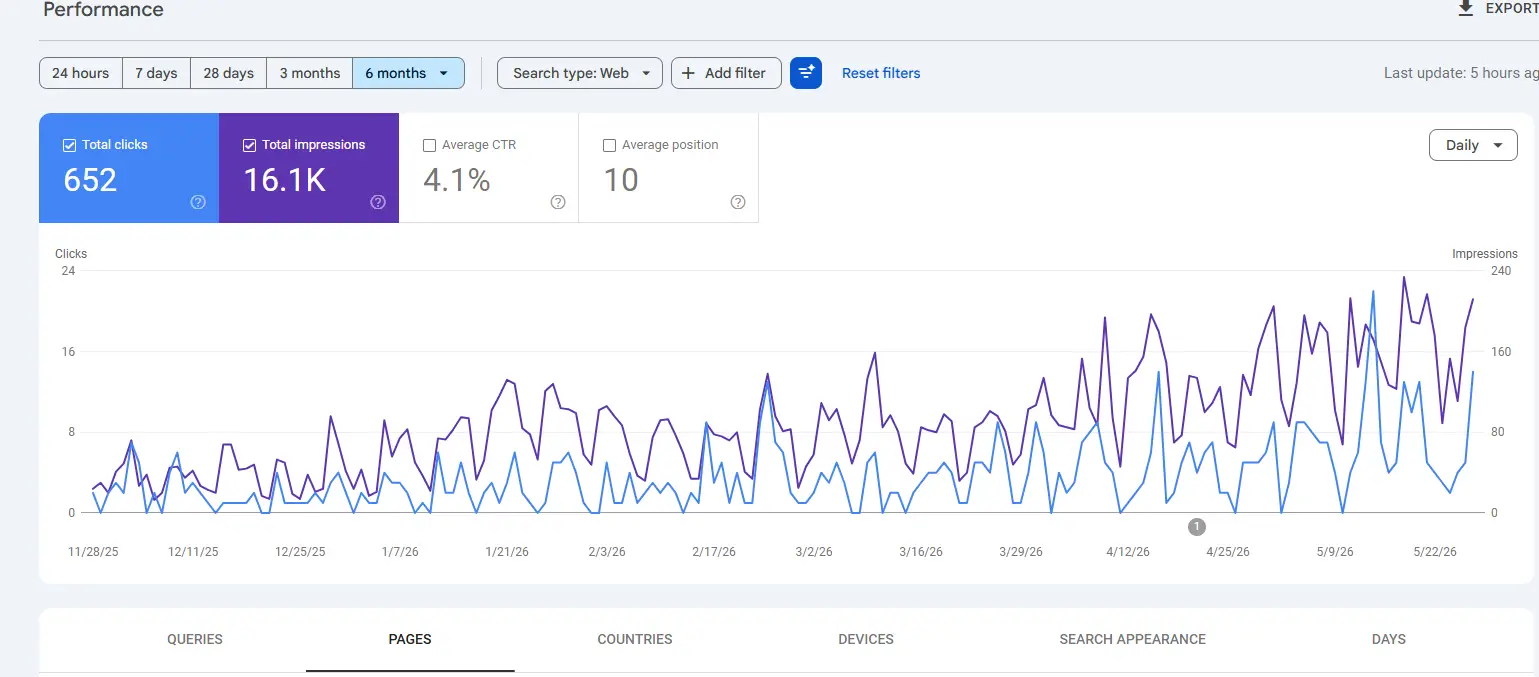
The Google Search Console data support the broader story here.
The Primary Care website showed measurable search activity, including clicks, impressions, click-through rate, and average position. The site had visibility across a six-month window, and the trend showed stronger activity developing over time.
The top linking text connected to the Primary Care brand and services. Which shows how linking text influences how a website is understood.
The reason this matter is that search engines do not evaluate a website from one signal alone. They look at patterns. Clearer anchor text, stronger page relationships, more consistent service language, and more crawlable pathways all help build that pattern over time with repetitive behavior.
Website Behavior and User Experience
The website behavior showed that the Primary Care website was not only gaining users. It was creating a larger digital footprint.
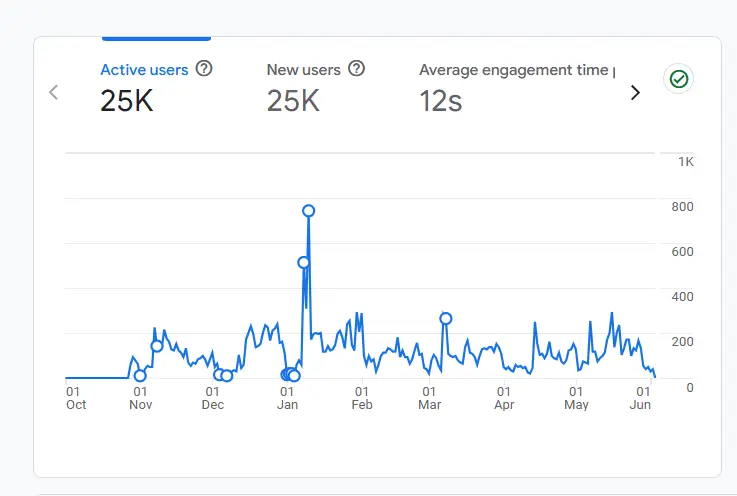
Across the available analytics views, the site showed growth in new users, views, and sessions. One view showed 18K new users, 28K views, and 20K sessions for the year-to-date period, while another showed the last 30 days with 3.5K new users, 7.2K views, and 4.2K sessions.
These numbers support the idea that the website was becoming more active and more visible. More importantly, they are showing that the website had enough activity to evaluate behavior, not just traffic totals.
For a new Primary Care website, this is the point where marketing starts becoming more strategic. The website is no longer just “live.” It is producing data that can guide the next round of decisions.
Once the website begins producing traffic patterns, the next improvements can be based on what users actually do.
This makes a signific change for a system-level learning.
What Changed Strategically
The May revamp changed the role of the website.
Before, the site functioned mostly as a destination.
After the May improvements, the website became more structured around intent.
People looking for locations had clearer direction.
People looking for services had stronger pathways.
People coming from social or referrals had a clearer place to land.
Search engines had stronger signals around primary care relevance.
Crawlers had cleaner pathways to follow.
Future tracking had cleaner identifiers to work with.
This is the difference between a website that simply exists and a website that supports growth.
Paid media can send traffic, but the website determines whether that traffic can understand, trust, and act. At the same time, the website’s structure determines how easily search systems can interpret and organize its content.
Healthcare websites require more trust than many other industries.
A patient is not just clicking a product. They are deciding whether a provider, location, and brand feel credible enough for their care.
That means a healthcare website must communicate clearly at every step. It needs to answer questions quickly, reduce confusion, and make next steps feel simple.
For this new Primary Care brand and website, the May revamp helped the digital experience move closer to that standard. It strengthened the connection between brand awareness and patient action.
The work also created a stronger base for future marketing. Once the website structure is clearer, every channel becomes easier to evaluate.
That is why this was not just an SEO project. It was a digital foundation project.