Google Ads is making another move that should get every lead-based business paying attention.
Starting June 15, 2026, new adopters will no longer be able to use the Google Ads API for offline click conversion imports, including enhanced conversions for leads. Google is directing new offline conversion workflows to the Data Manager API instead. Existing users may still have legacy access during migration, depending on prior developer-token usage, but the direction is clear:
Google wants offline business data flowing through a more structured measurement system.
For most business owners, the API part is not the real story.
The real story is this: Google is making it harder to run serious advertising on weak conversion data.
For years, many accounts have been optimized around the easiest actions to track. Form submissions. Phone calls. Button clicks. Lead submitted events. Those signals are useful, but they are not the same as revenue. They tell Google that someone raised their hand. They do not tell Google whether that person became a qualified customer.
That difference matters more than most businesses realize.
Why This Matters for Urgent Care and Other Service Businesses
For urgent care groups and service-based businesses, this shift matters because the most important conversion does not always happen online.
A patient may click an ad, call the clinic, get directions, schedule online, walk in, register, and complete the visit later. A service customer may click an ad, request information, speak with the office, book an appointment, receive the service, and become revenue days after the original search.
If Google Ads only sees the first action, the account is working with an incomplete story.
That is why offline conversion tracking is becoming more important. Google explains that offline conversion imports help measure what happens after an ad click or call when the final conversion happens away from the website, such as over the phone or inside the business process. Starting June 15, 2026, Google is also moving new offline conversion and enhanced conversions for leads uploads toward the Data Manager API instead of the older Google Ads API workflow.
For urgent care, this is not just about tracking “more conversions.” It is about knowing whether marketing activity became real patient volume.
A strong urgent care measurement path may include:
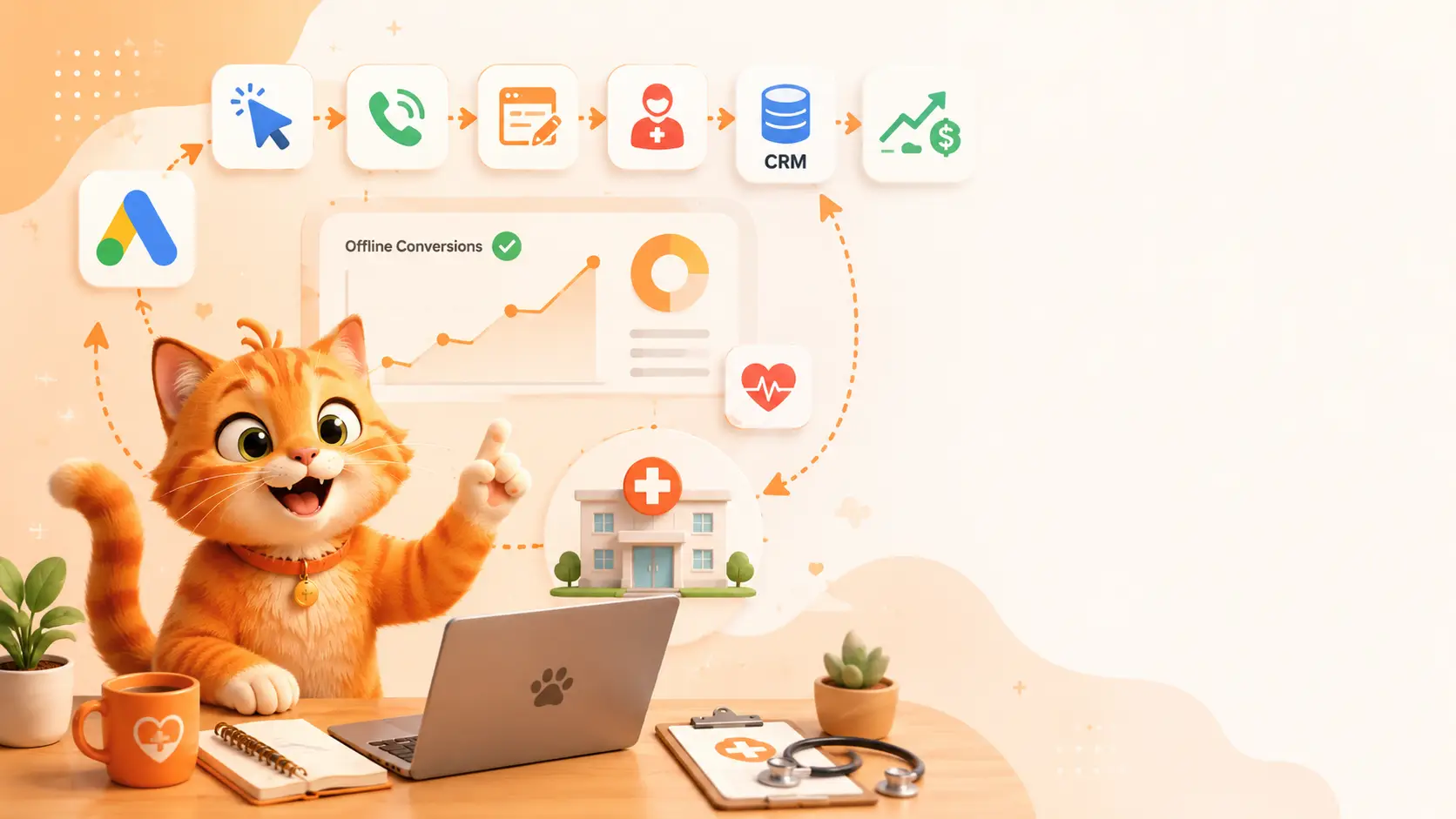
Ad click Phone call, directions click, or online registration start Registration completed Patient visit completed Visit matched to location Estimated visit value or revenue assigned
That structure gives Google Ads a better understanding of which campaigns are driving meaningful patient behavior, not just surface-level engagement.
The same idea applies to other service businesses. A form fill, phone call, or appointment request may be the beginning of the journey, but it is not always the business outcome. If the final result never gets sent back into the ad account, Google may continue optimizing toward the easiest action instead of the most valuable one.
That is where many businesses lose efficiency.
They may think they have a traffic problem, a budget problem, or a lead problem. However, the real issue may be that their advertising platform is not receiving the downstream data it needs to learn what a good customer or patient actually looks like.
This is also why the CRM, patient intake system, call tracking, and reporting process matter so much. For urgent care, the goal is not only to count clicks, calls, and directions. The goal is to understand which marketing actions led to actual visits.
That is the difference between lead tracking and visit attribution.
And as Google continues pushing advertisers toward stronger first-party data and offline conversion workflows, urgent care groups that connect ad activity to completed patient outcomes will have a stronger advantage than those still optimizing only for calls, clicks, and forms.
The CRM Becomes Part of the Ad Strategy
This is the part many teams miss.
A CRM is not just a place to store leads. It becomes the system that teaches Google which leads matter.
When CRM stages are connected correctly, the ad account can learn from real outcomes instead of surface-level activity. Google’s documentation explains that enhanced conversions for leads uses user-provided data, such as email addresses, to help attribute imported offline conversion data back to the campaign interaction.That means the CRM has to be clean.
If lead statuses are inconsistent, if sales teams forget to update stages, if revenue is missing, or if every inquiry gets labeled the same way, the data going back into Google becomes weak.
And weak data creates weak optimization.
This is why closed-loop attribution requires more than a technical setup. It requires discipline across marketing, sales, intake, and operations.
The Bigger Shift
Google’s 2026 offline conversion update is not just a compliance deadline. It is part of a bigger shift toward first-party data, stronger attribution, and revenue-based optimization.
The businesses that adapt early will have an advantage because they will not be guessing which campaigns work. They will know.
They will be able to see which ads created leads, which leads became appointments, which appointments became customers, and which customers produced revenue.
That is the difference between reporting activity and understanding performance.
And that is where paid search is heading.
Not more leads for the sake of more leads.
Better data. Better decisions. Better revenue.