
Have you noticed sudden, dramatic shifts in your website's rankings like tectonic plates shifting under your digital presence? Welcome to the world of Google Earthquakes! This term is becoming popular among SEO professionals as major SERP (Search Engine Results Page) fluctuations occur due to Google’s algorithm updates. Let’s dive into what’s shaking the SEO world and explore how you can adapt to these seismic shifts.
What Is a Google Earthquake?
A Google Earthquake refers to the ranking tremors caused by significant updates to Google’s search algorithm. It’s not a natural disaster but a metaphor for the massive fluctuations websites experience on SERPs.
Recently, the Semrush Sensor, a tool that monitors SERP volatility, reported a whopping 8.1/10 volatility score across all categories in the past 30 days, categorized as "Very High." Such events are now often nicknamed Googlequakes.
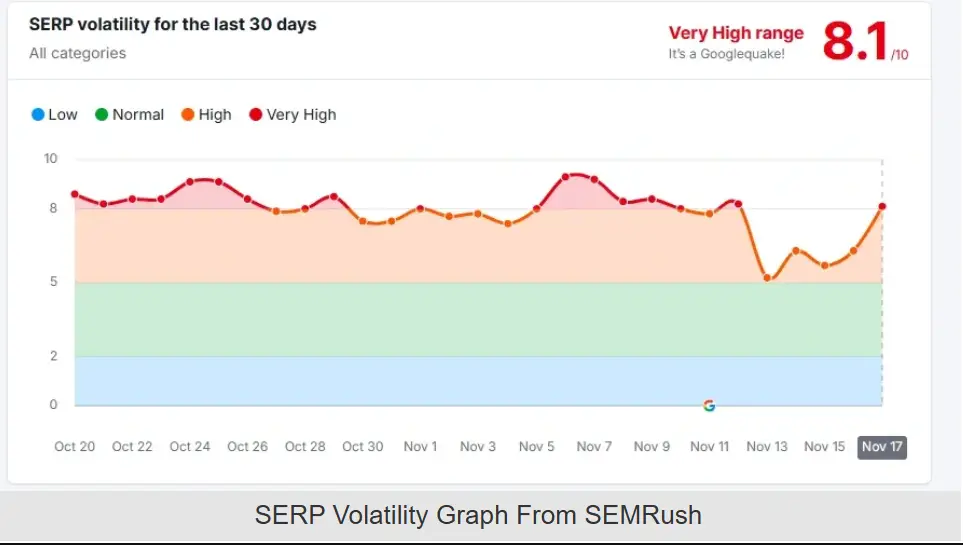
This activity is because of Google's November 2024 Core Update, which began rolling out on November 11 and is expected to take two weeks to complete. According to Google, these updates aim to enhance search result quality by focusing on user experience, content relevance, and site authority. However, they often leave rankings as unpredictable as aftershocks.
How to Adapt to Googlequakes
When a Google Earthquake hits, it’s essential to remain proactive. Here’s how you can weather the storm:
1. Monitor Your Website’s Performance
Track changes in your website traffic and rankings using tools like Google Search Console and Google Analytics. This helps you identify pages that need improvement.
2. Enhance Content Quality
Content remains a key factor during algorithm updates. Follow Google’s E-E-A-T guidelines (Experience, Expertise, Authority, Trustworthiness)** by ensuring your content: - Addresses user intent. - Is well-researched, updated, and relevant. - Provides genuine value to readers.
3. Stay Updated
Keep up with industry news through reliable sources such as Search Engine Journal, Semrush, and Google Search Central Blog. Understanding what’s behind the volatility enables you to make informed decisions.
4. Leverage Tools Like Semrush Sensor
The Semrush Sensor is a valuable tool for tracking SERP fluctuations. Features like Volatility Measurement and Winners and Losers Reports provide insights into your site’s performance and that of competitors. Its Position Tracking tool even allows for tailored analysis, turning ranking drops into actionable opportunities.
5. Revise Your SEO Strategy
If your rankings drop significantly, refine your approach. Reassess your keywords, optimize poorly performing pages, and improve your backlink strategy to align with new algorithm requirements.
Final Thoughts
Google Earthquakes may seem intimidating, but they’re part of the ever-evolving SEO landscape. Instead of fearing them, view these updates as an opportunity to build stronger foundations for your website. By monitoring trends, improving content, and staying flexible, you can turn these tremors into a chance for growth.
So, when the next Googlequake hits, will your website stand tall? Stay prepared, adapt your strategy, and let these updates propel you toward long-term success. Stay informed, stay proactive, and let your website thrive amidst the SEO landscape’s inevitable changes!
Resources for SEO Insights:
Search Engine Journal
SEMRush